School carnival planning is one of the most exciting — and most overwhelming — projects a PTA or school events committee can take on. Whether you’re organizing a spring fair in suburban New Jersey, a fall festival in Pennsylvania, or an end-of-year celebration in New York, the logistics can pile up fast. From booking bounce houses and carnival rides to managing vendor permits and food stations, there’s a lot to coordinate before the first student walks through the gate.
This guide breaks down everything you need to know — step by step — so your school carnival runs smoothly, safely, and leaves families talking about it for years.
Why School Carnivals Matter More Than You Think
A well-run school carnival does more than raise funds. It builds community, strengthens school spirit, and creates lasting memories for students, parents, and staff alike. Research from the National PTA consistently highlights that community events tied to schools improve family engagement and student belonging — both of which positively impact academic outcomes.
In the tri-state region of NJ, PA, and NY, school carnivals are a beloved tradition. Families expect high energy, safe rides, fun games, and great food. Setting the right tone starts with thoughtful, early planning — ideally four to six months before your event date.
Step 1: Build Your Planning Committee
Strong school carnival planning starts with the right people in the room. You don’t want one person carrying all the weight. Delegate responsibilities clearly from the start.
Core committee roles to fill:
- Event Chair – oversees the full carnival, manages the timeline, and acts as the main point of contact for vendors
- Vendor Coordinator – handles rides, game booths, inflatables, and entertainment bookings
- Permits & Safety Officer – liaises with local authorities, reviews insurance certificates, and ensures compliance
- Volunteer Manager – recruits, schedules, and assigns school volunteers
- Finance/Budget Lead – tracks expenses, manages ticket sales, and reports to the PTA board
- Marketing Lead – handles flyers, social media, school newsletters, and signage. In larger school districts in New Jersey and New York, the Permits & Safety Officer role is especially critical. Local municipalities often require event permits, fire marshal approvals, and proof of liability insurance from all ride and inflatable vendors.
Step 2: Set Your Budget Early
Budget is the backbone of your school carnival planning process. Underestimating costs is the number one mistake first-time organizers make. Start with a realistic estimate before you commit to anything.
Typical budget categories to plan for:
- Rides and inflatables
- Game booths and prizes
- Food vendors or catering
- Permits and insurance
- Marketing and signage
- Volunteer appreciation
- Equipment rentals (tables, tents, generators)
- Contingency fund (10–15% of total budget)
Fundraising revenue sources to consider:
- Ticket or wristband sales
- Sponsorships from local businesses
- Food and merchandise sales
- Raffle or silent auction
- Booth rental fees for outside vendors
In the NJ/PA/NY region, a mid-sized school carnival with 300–600 attendees typically operates on a budget of $8,000–$25,000, depending on the scale of rides and entertainment booked. Setting a clear break-even goal — and a revenue target — keeps your team focused and your planning grounded.
Step 3: Choose the Right Date, Time, and Venue
Timing is everything. Most successful school carnivals in the tri-state area happen in May, June, or September, when the weather cooperates and academic calendars allow. Avoid scheduling during state testing windows, major religious holidays, or competing community events.
Key venue considerations:
- Does your school’s parking lot or athletic field offer enough space for rides, food tents, and guest flow?
- Is there accessible parking for families with strollers or mobility needs?
- Does the venue have restroom access nearby?
- Are there power hookups for vendors, or will you need generators?
- What’s the rain plan — does the venue offer indoor backup space?
Many schools in New Jersey and Pennsylvania host carnivals directly on school grounds, which reduces rental costs but may require additional permits from the district administration. Always confirm your venue approval in writing, well in advance.
Choosing the Right Rides and Inflatables for Your School Carnival
One of the most exciting parts of school carnival planning is selecting the rides and inflatables. This is also where safety and age-appropriateness must guide every decision.
Age-Appropriate Ride Selection
Your attendee demographic matters enormously. A carnival serving K–5 students will need very different equipment than one welcoming middle schoolers.
For elementary-age students (K–5):
 Bounce houses and obstacle courses Mini Ferris wheels and kiddie rides Spinning teacup or carousel-style rides Inflatable slides (dual-lane for faster throughput) Toddler-friendly soft play areas for pre-K siblings
For middle school students (Grades 6–8):
Larger inflatable obstacle courses Mechanical bulls (with appropriate padding) Trackless trains for novelty Giant slides and climbing walls Interactive games like dunk tanks and ring toss
For mixed-age events (full school or community carnivals):
A variety across age groups keeps all guests engaged Separate “little ones” zones reduce crowding and accidents Wristband systems help manage access by height or age
Working with Ride and Inflatable Vendors in NJ, PA & NY
Always work with licensed, insured inflatable and ride vendors. In New Jersey, carnival ride operators must register with the NJ Department of Community Affairs and comply with the NJ Carnival-Amusement Rides Safety Act. Pennsylvania has its own carnival ride safety regulations enforced through the Department of Agriculture. New York State regulates amusement rides through the Department of Labor.
Before signing any vendor contract, confirm:
- Valid general liability insurance (minimum $1M–$2M coverage)
- Proof of ride inspection and certification
- Operator licensing and compliance documentation
- Setup and teardown timeline
- Weather cancellation and rescheduling policy
Local companies like Horizon Giggles specialize in school carnival entertainment across the NJ/PA/NY area, offering bounce houses, inflatable obstacle courses, slides, and interactive games designed specifically for school and community events. Choosing a vendor who already understands local permit requirements saves your committee enormous time.
Planning the Game Booths: Fun That Actually Works
Carnival games are where students spend the most time — and where they build the strongest memories. The best school carnival game setups are easy to staff, quick to play, and rewarding for kids of all skill levels.
Classic Carnival Games That Always Deliver
Skill-based games:
- Ring toss
- Duck pond (great for younger kids)
- Ball toss/bean bag toss
- Fishing booth
- Balloon darts (with soft-tip darts for school events)
Active games:
- Relay races
- Giant Jenga
- Limbo
- HulaHoop Challengee
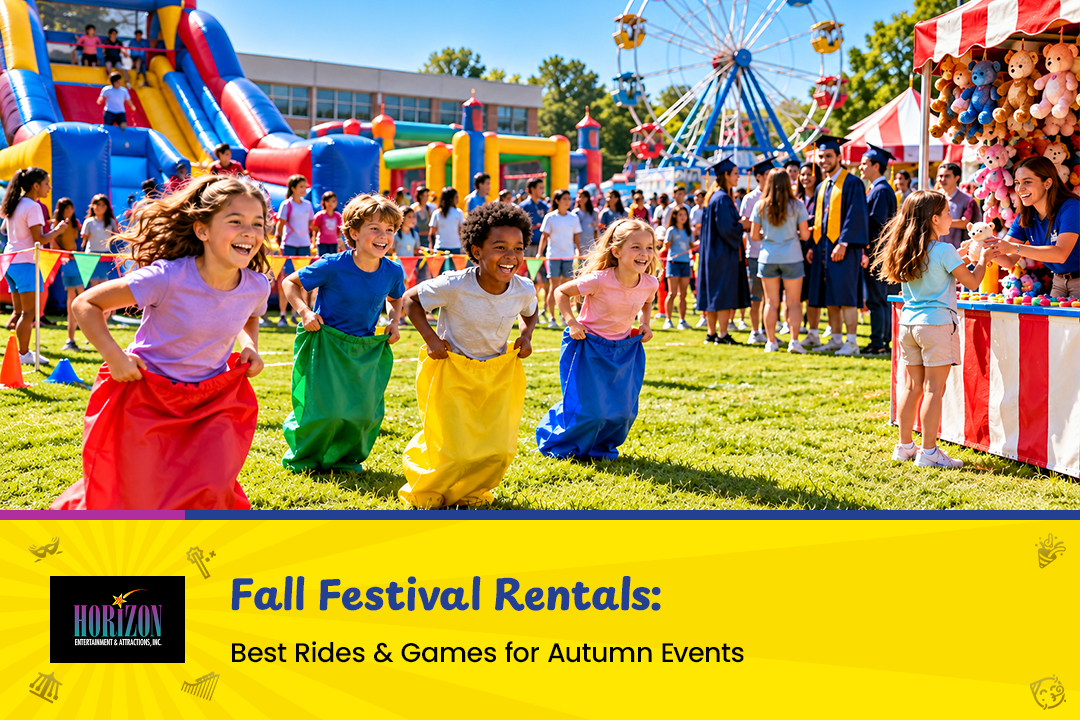
- Sack race station
Managing Prizes Effectively
Prize management is often an afterthought — and it shouldn’t be. Budget for prizes separately and source them early. Bulk prize suppliers like Oriental Trading or 4imprint offer school-safe, age-appropriate prize packs at competitive rates.
- Offer prize tiers (small, medium, large) based on ticket spend
- Use sealed bags or pouches to speed up prize distribution
- Avoid prizes with small parts for K–2 grade booths
- Consider a “prize redemption booth” to reduce per-booth stock management
Staffing Game Booths
Each booth should have at least one dedicated volunteer who can manage the flow, handle tickets, and keep the game moving. Train volunteers before the event — even a 15-minute walkthrough makes a huge difference in day-of efficiency.
Food and Beverage Planning for Your School Carnival
Food is the heart of any festival atmosphere. Your food plan needs to balance variety, speed of service, allergen awareness, and profitability.
Popular Food Offerings for School Carnivals
Classic carnival fare:
- Hot dogs and hamburgers
- Popcorn and cotton candy
- Funnel cake or fried dough
- Snow cones and slushies
- Pizza (by the slice for easy service)
Healthier options (increasingly popular):
- Fresh fruit cups
- Grilled corn
- Yogurt parfait cups
- Veggie wraps
Allergen and Dietary Considerations
In NJ, PA, and NY school communities, nut allergies and dietary restrictions are common. Label all food stations clearly with allergen information. If you’re hiring outside food vendors, require them to disclose ingredients in writing.
- Designate a nut-free zone if possible.
- Offer at least one vegetarian and one gluten-free option
- Post ingredient lists at each food station
- Train food volunteers on cross-contamination basics
Food Vendor vs. DIY Food Setup
Hiring outside food trucks or carnival catering vendors simplifies logistics but reduces revenue margins. Running food in-house requires more volunteer hours but typically generates 30–40% more net revenue per item sold. Many school carnivals do a hybrid — hire one or two outside vendors for specialty items, and run core food stations (popcorn, drinks, hot dogs) in-house.
School Carnival Safety: A Non-Negotiable Priority
No amount of fun is worth a preventable injury. Safety planning is the most important part of school carnival planning, and it starts well before the event day.
Site Layout and Crowd Flow
A poorly laid-out carnival creates bottlenecks that lead to accidents. When mapping your event site:
- Keep ride zones clearly separated from pedestrian walkways
- Place first aid stations in highly visible, central locations
- Designate a lost-child meeting point and announce it repeatedly
- Ensure emergency vehicle access is never blocked
- Mark all tent stakes and ground-level hazards with bright tape or cones
Vendor Safety Verification Checklist
Before any vendor sets up equipment on your school grounds:
- Request the current certificate of insurance (COI) naming your school as additional insured
- Confirm equipment has been inspected within the required state-mandated timeframe
- Verify operator certifications are current
- Walk through the equipment with the vendor during setup and identify any concerns
- Establish a clear communication protocol if equipment needs to be shut down mid-event
Volunteer Safety Training
Every volunteer should know:
- Where is first aid located
- What to do if a child is injured
- The lost-child protocol
- Who the event emergency contact is
- How to manage crowd surges near popular attractions
A brief pre-event volunteer meeting — even 20 minutes — dramatically reduces confusion on the day.
Weather Contingency Planning
In the Northeast, the weather can change fast. Build a weather decision timeline into your planning:
- Monitor weather forecasts starting 72 hours out
- Define your “go/no-go” criteria (e.g., sustained winds over 25 mph = inflatables down)
- Establish a vendor communication chain for weather holds
- Have a rain-date option ready and communicate it to families in advance
Most reputable inflatable vendors in NJ, PA, and NY include weather hold and rescheduling terms in their contracts. Confirm this before signing.
Permits and Legal Requirements in NJ, PA & NY
Navigating local regulations is one of the trickier parts of school carnival planning, especially in densely populated areas of the tri-state region.
New Jersey
- File for a Special Event Permit with your local municipality
- Carnival ride operators must be registered with the NJ Department of Community Affairs and comply with the NJ DCA
- Contact your local fire marshal for tent and generator approvals
- Confirm school district approval for use of school property
Pennsylvania
- PA carnival ride safety is regulated by the PA Department of Agriculture
- Local municipalities may require event permits for public assembly
- Food vendors need valid food handler certifications
- Confirm liability coverage requirements with your school district’s risk manager
New York
- NYS Department of Labor regulates amusement rides
- NYC and suburban NY municipalities often have strict noise and crowd limits
- Special Event permits may be required through your local parks or planning department.
- Review your school district’s insurance requirements for third-party vendors.s
Pro tip: Assign your Permits Officer to begin the permit research process at least 8–10 weeks before your event. Some municipalities have slow processing times, and missing a deadline can derail the entire event.
Marketing Your School Carnival for Maximum Turnout
A great carnival that no one knows about is a missed opportunity. Build a marketing plan that reaches every family in your school community.
Multi-Channel School Carnival Promotion
Digital channels:
- School website and parent portal announcements
- PTA or school Facebook group posts (weekly countdown posts)
- Instagram Stories and Reels showing setup sneak peeks or past event highlights
- Email newsletters via your school’s communication platform (Remind, Bloomz, etc.)
- Nextdoor posts for community-wide reach
Print channels:
- Flyers sent home in student folders (2–3 weeks out, then a reminder week-of)
- Posters in school hallways, the main office, and the gym
- Banner outside school entrance (if permitted)
Community outreach:
- Reach local businesses for sponsorship and co-promotion
- Announce at school board meetings
- Coordinate with the school principal for morning announcements
Pre-Sale Tickets and Wristbands
Selling tickets or unlimited-ride wristbands in advance serves two purposes: it secures revenue before the event and reduces day-of lines. Use platforms like Eventbrite, Membership Toolkit, or SignUpGenius to manage pre-sales efficiently.
Day-of-Event Execution: A Smooth Carnival Starts the Night Before
The best school carnival planners treat event day as the easy day — because all the hard work was already done.
The Day-Before Setup Checklist
- Confirm final headcount with all vendors
- Walk the site and mark booth locations with tape or cones
- Stage all supplies (tickets, bags, prizes, signage) in a locked room
- Confirm volunteer schedules and distribute assignments in writing
- Charge all walkie-talkies or communication devices
- Post the event layout map for all committee members
Day-of Event Flow
- Open vendor access 3–4 hours before gates open
- Committee walkthroughhh 1 hour before gates open — check every station
- Volunteer check-in 45 minutes before gates open
- Gates open — staggered entry if you have over 500 attendees to avoid entrance congestion
- Ongoing safety sweeps every 45–60 minutes throughout the event
- Vendor departure staggered by zone after gates close
Post-Event: Wrap Up the Right Way
The carnival doesn’t end when the last ride stops spinning. Your post-event process protects your school’s relationship with vendors, volunteers, and the community.
Post-event checklist:
- Conduct a final sitewalkthrough for damage and cleanliness
- Collect all vendor departure confirmations
- Tabulate revenue and compare it to the budget within one week
- Send thank-you emails to all volunteers and sponsors
- Debrief your committee — what worked, what didn’t
- Document vendor reviews for future use
- Share success numbers (attendance, funds raised) with the school community
Sharing your results — “We raised $14,000 for the library renovation!” — builds momentum for next year’s event and shows families that their participation made a real difference.
Work with a Trusted Local Vendor in NJ, PA & NY
For the school carnival to truly come together, the vendors you choose make all the difference. Horizon Giggles offers a full range of school carnival entertainment — from bounce houses and inflatable obstacle courses to interactive games and themed party packages — all backed by proper insurance, safety compliance, and experience serving schools across New Jersey, Pennsylvania, and New York.
Their team understands the unique requirements of school events: age-appropriate equipment, reliable setups, and the professionalism that PTAs and school administrators expect. Whether you’re planning a small classroom celebration or a full-school spring festival, the right inflatable and entertainment vendor is one of the most important bookings you’ll make.
Explore options and get a quote directly at horizongiggles.com — and give your planning committee one less thing to worry about.
Final Thoughts on School Carnival Planning in NJ, PA & NY
School carnival planning is a big undertaking, but it’s one of the most rewarding projects a school community can pursue together. When done right, it raises vital funds, deepens community ties, and gives students memories they’ll carry long after the tents come down.
Start early. Build a strong team. Verify every vendor’s safety credentials. Promote widely. And don’t forget to enjoy the day yourself — you earned it.
For more ideas, resources, and local vendor support across New Jersey, Pennsylvania, and New York, the National PTA offers community event planning guides, and the American Rental Association provides a directory of certified equipment rental companies that can complement your carnival setup.
Your school carnival can be the highlight of the entire school year — and with the right planning, it absolutely will be.