Planning a school fair, corporate picnic, or community block party in New Jersey means tackling one of the most exciting — and often confusing — parts of event coordination: carnival rentals pricing. The moment you request your first quote, you’ll notice that costs vary wildly from vendor to vendor, and not always for obvious reasons. Understanding what drives those numbers puts you firmly in control of your event budget and helps you make smarter, more confident booking decisions.
This article breaks down every major factor that impacts carnival rental costs — from the electricity your rides consume to the miles your vendor drives to reach your venue. Whether you’re renting a single bounce house or building a full-scale midway experience, understanding the factors that drive pricing will save you real money and eliminate last-minute budget surprises.
Why Carnival Rentals Pricing Isn’t One-Size-Fits-All
Most people assume carnival rental costs follow a simple formula: pick a ride, pay a flat rate, done. The reality is far more layered. Event rental pricing depends on a web of interconnected factors, and each vendor builds its quotes differently based on operational costs, equipment inventory, and service-area logistics.
A small inflatable slide and a towering mechanical carnival ride aren’t just different in size — they require different power draws, different staffing levels, different transport vehicles, and different permit thresholds. Even two identical rides quoted on the same day can land at very different price points depending on where your venue is located, what time of year you’re booking, and how long you need the equipment running.
Understanding this complexity doesn’t require a business degree. It requires knowing which questions to ask and which line items to look for in every quote you receive. The sections below walk you through every major cost driver, one by one, so nothing catches you off guard.
Power Requirements: The Electrical Factor That Surprises Most Clients
Few people stop to think about electricity when planning a carnival event. But power is one of the most significant variables in carnival rental pricing, and it can quietly add hundreds of dollars to your total bill if you’re not prepared for it going in.
Carnival rides are high-draw electrical equipment. They run motors, lighting systems, sound units, and sometimes climate controls — all simultaneously. Larger rides like Ferris wheels, tilt-a-whirls, and train rides can require dedicated 30-amp or even 50-amp circuits. Running multiple pieces of equipment simultaneously significantly compounds the electrical demand, and most standard outdoor venues weren’t designed to handle it without support.
How Much Power Do Carnival Rides Actually Need?
Most inflatable rentals — bounce houses, obstacle courses, and slides — require a standard 20-amp circuit per unit. That’s manageable if your venue has accessible outdoor outlets nearby. But as you add mechanical rides, carnival game stations with LED lighting, or a live DJ setup, your total power requirements climb fast.
• Bounce houses and standard inflatables: 20 amps per unit
• Mechanical rides such as merry-go-rounds and spinning attractions: 30–50 amps per unit
• Large-scale carnival rides, including Ferris wheels and swing rides: 50+ amps, sometimes requiring three-phase power
• Carnival game clusters with LED lighting: 15–20 amps per cluster
• Sound systems and DJ equipment: 20–30 amps depending on setup
When a venue can’t support the required electrical load, the rental company brings in generators — and that cost gets passed directly to you.
Generator Rentals and Electrical Infrastructure
Generator fees are a common line item that clients overlook until they see the final invoice. A portable generator sized for a small carnival setup — around 20 to 30 kilowatts — can add $150 to $500 to your rental bill. Larger events requiring multiple generators can push that figure well above $1,000 before factoring in fuel.
Some venues — parks, school grounds, and fairgrounds — have dedicated power hookups designed specifically for outdoor events. If your venue has this infrastructure, confirm the available amperage before booking and share that information with your vendor upfront. A quick conversation with your venue coordinator can save you a significant amount on generator rental costs. According to OSHA’s electrical safety guidelines for construction and outdoor use, proper grounding and circuit management are also legal requirements — not just best practices — meaning your vendor must account for compliance in their setup procedures and associated costs.
Staffing: The Hidden Cost That Shapes Your Final Bill
When you rent carnival equipment, you’re not just paying for hardware. In most cases, professional staffing is either bundled into the quote or offered as a required add-on, and it represents a substantial portion of your total event cost. Understanding how staffing is structured helps you budget accurately and avoids costly misunderstandings on the day of your event.
Carnival rides require trained operators. This isn’t optional — it’s both a liability requirement and a guest safety obligation. Most reputable carnival rental companies in New Jersey require at least one certified operator per mechanical or motorized ride. These operators handle equipment setup, monitor riders during operation, manage guest queues, enforce height and weight restrictions, and perform ongoing on-site safety checks throughout the event window.
Ride Operators vs. General Event Staff
There’s a meaningful and important difference between a certified ride operator and general event support staff. Ride operators undergo training specific to the equipment they manage. They understand load limits, motor behavior, emergency stop procedures, and rider screening protocols. General staff might assist with crowd flow or ticket collection, but they cannot substitute for a qualified operator on any mechanical ride.
Here’s how staffing typically breaks down across a standard carnival rental event:
• Ride operators: Required per mechanical ride; may be included in base rate or billed separately at hourly rates
• Setup and teardown crew: Usually 2–4 workers, depending on equipment size and quantity; time is billed at crew hourly rates
• On-site event supervisors: Optional but strongly recommended for events exceeding 200 guests
• Safety monitors: Required for certain ride classifications under New Jersey state amusement regulations
• Ticketing or queue management staff: Often offered as an optional add-on for larger events
How Staffing Levels Affect Your Total Quote
The longer your event runs, the more staffing hours you consume. A four-hour school carnival with three mechanical rides and two inflatable stations might require eight to twelve total staff hours. At typical labor rates for skilled carnival operators, that staffing component alone can add $400 to $800 to your invoice — even before overtime or evening-rate premiums are factored in.
✅ Always confirm staffing inclusions explicitly before signing any rental contract
✅ Ask specifically whether operator hours are capped or billed at overtime beyond a set threshold
✅ Verify that all assigned operators carry documentation of certification or formal equipment training
✅ Request a written staffing plan that maps which personnel are responsible for which equipment
✅ Clarify whether setup and teardown crew time is included in the quoted rental window or billed separately
The best carnival rental companies are transparent about staffing costs from the very first quote. If a vendor is vague about who manages the equipment on event day or dodges direct questions about operator qualifications, treat that as a serious red flag. You can explore how Horizon Giggles approaches staffing and operator accountability as part of their full-service event packages across New Jersey.
Travel Distance and Delivery Fees
Your vendor’s location relative to your event venue has a direct and measurable impact on your final quote. Travel agecover for fuel costs, driver time, vehicle wear and tear, and sometimes tolls or overnight accommodation — all of ich which are factored into the cost of delivering equipment to your event and retrieving it afterward.
Most carnival rental companies in New Jersey establish a defined base service radius. Inside that radius, delivery may be included in the base rate or charged as a flat fee. Beyond that radius, costs typically scale by the mile or by geographic zone, and those charges can add up quickly for venues in more remote or suburban areas.
How Vendors Calculate Travel Costs
Different vendors use different billing models for delivery and travel expenses:
• Flat-rate zone pricing: The service area is divided into geographic zones — for example, within 25 miles, 25 to 50 miles, and 50-plus miles — each with a preset delivery fee assigned
• Per-mile billing: A defined rate per mile applies from the vendor’s warehouse to your venue and back, calculated on round-trip distance
• Time-based pricing: Travel time is billed at a standard hourly crew rate, which is particularly common for long-haul deliveries requiring multiple staff
• Itemized fuel and toll surcharges: Some vendors list fuel costs and toll fees as separate line items, especially for large trucks hauling ride trailers across state lines or through toll-heavy corridors
For an event in northern New Jersey, a vendor based in the central part of the state might charge significantly more than a locally based provider. The pricing difference for travel alone can easily run $100 to $400, depending on distance and the type of vehicle required.
Ways to Reduce Travel Charges
✅ Choose a vendor with a base of operations close to your event venue
✅ Book multiple items from a single vendor to consolidate delivery into one trip
✅ Schedule your event to allow flexible delivery windows — this helps avoid after-hours and weekend delivery surcharges
✅ Ask your vendor whether a self-pickup option exists for smaller, trailer-ready rentals
✅ Select venues near major highways to reduce transit time and associated fuel costs
Working with a locally rooted company makes a genuine difference here. Horizon Giggles operates from a regional base in New Jersey, keeping delivery costs manageable for clients across the area and ensuring faster response times on event day.
Equipment Type and Ride Selection: What You Choose Determines What You Pay
Not all carnival equipment costs the same to own, maintain, transport, or staff. The specific rides, games, and inflatables you select are one of the largest individual drivers of your total rental cost. Understanding the general pricing tiers across different equipment categories helps you build a package that fits your budget without sacrificing the guest experience.
Inflatables — bounce houses, combo units, slides, and obstacle courses — are typically the most affordable carnival rental option. They’re relatively lightweight, straightforward to transport, and require minimal staffing oversight. Mechanical rides introduce more complex logistics, require more qualified labor, draw more power, and involve greater insurance exposure — all of which reflect proportionally in higher pricing.
Rides vs. Games vs. Inflatables: Cost Comparison
Here’s a general breakdown of how different equipment types tend to price out for a standard rental in New Jersey:
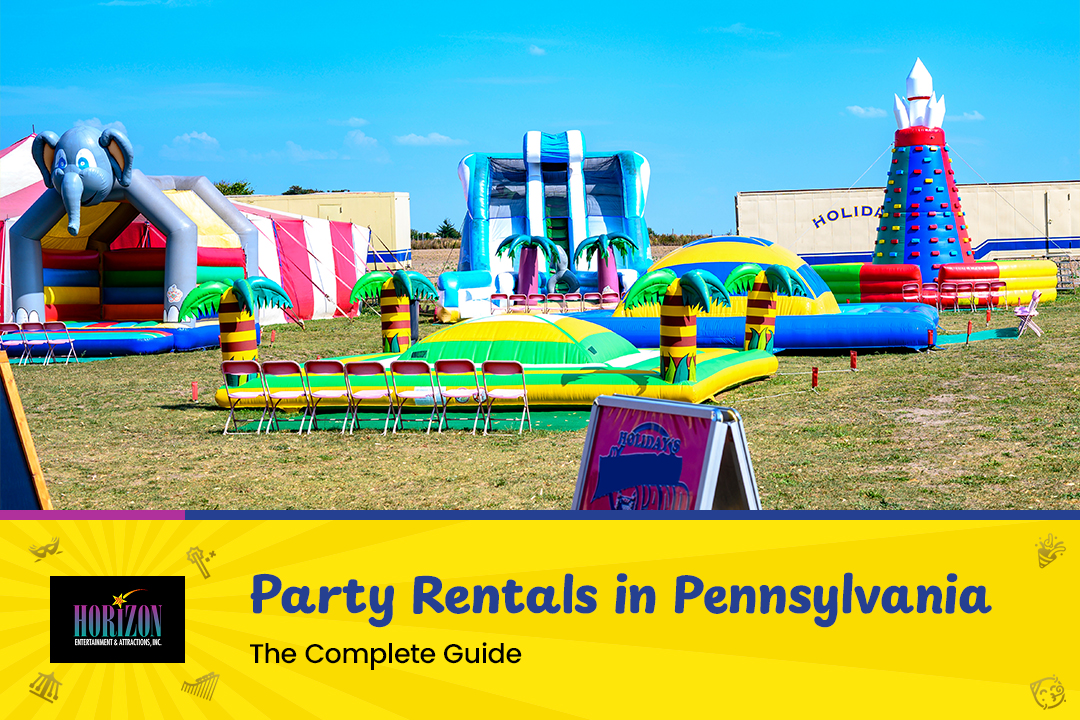
• Inflatables, including bounce houses and combo slides: $150–$400 per unit for a standard 4–6 hour rental window
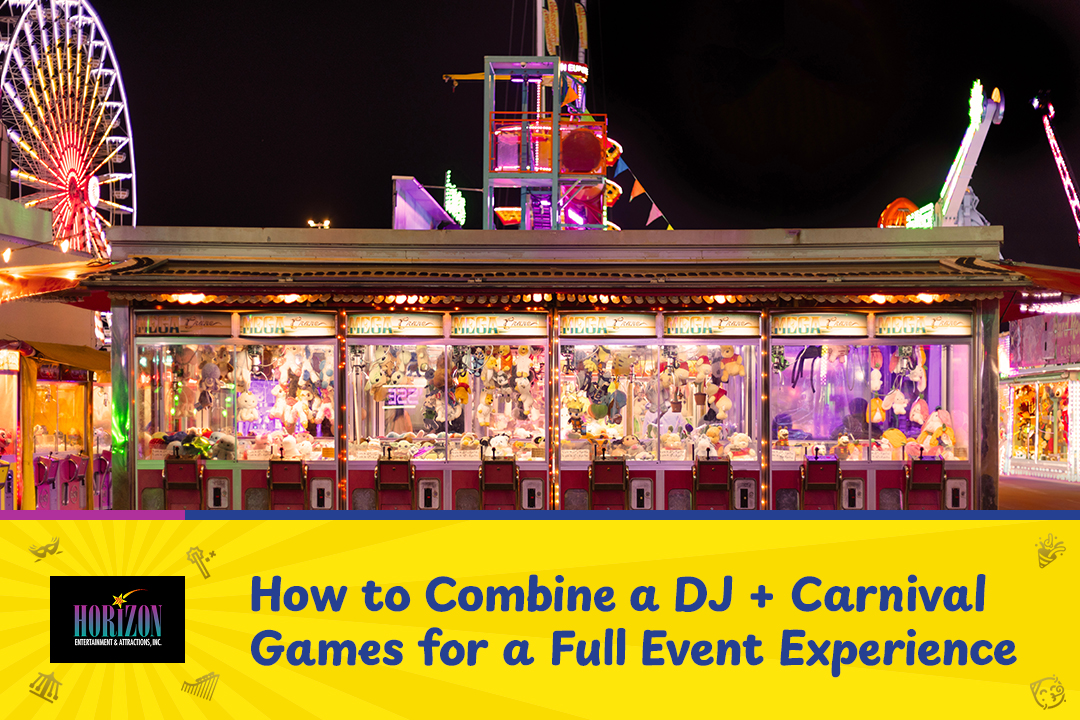
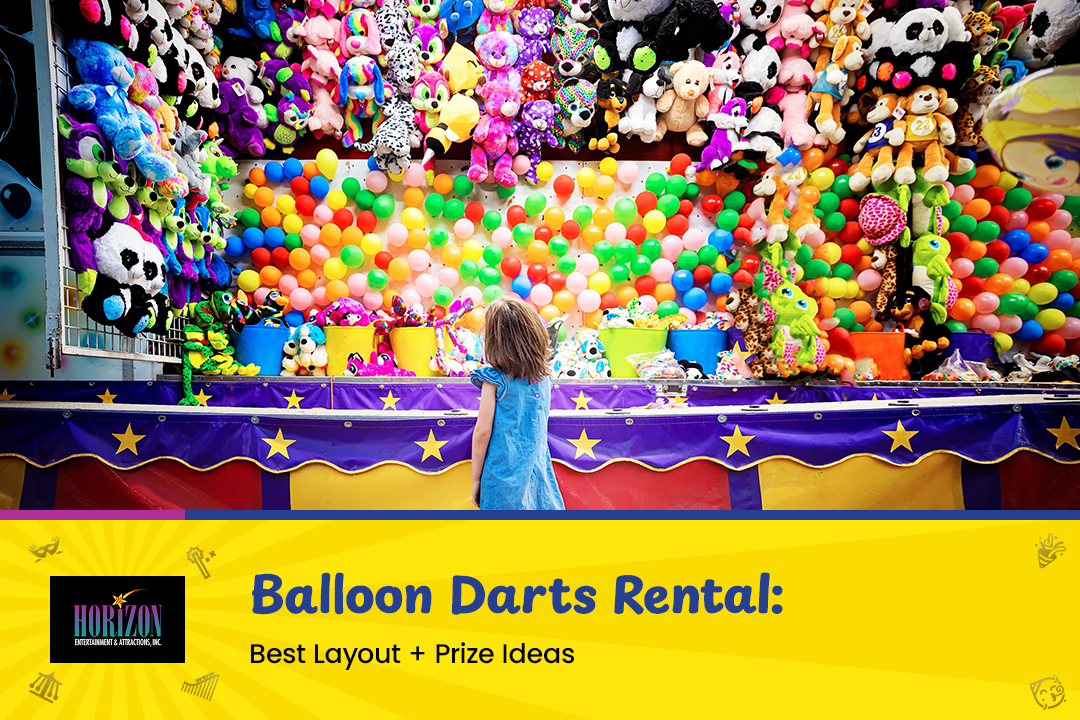
• Carnival game stations such as ring toss, duck pond, and balloon darts: $100–$300 per game with a trained attendant
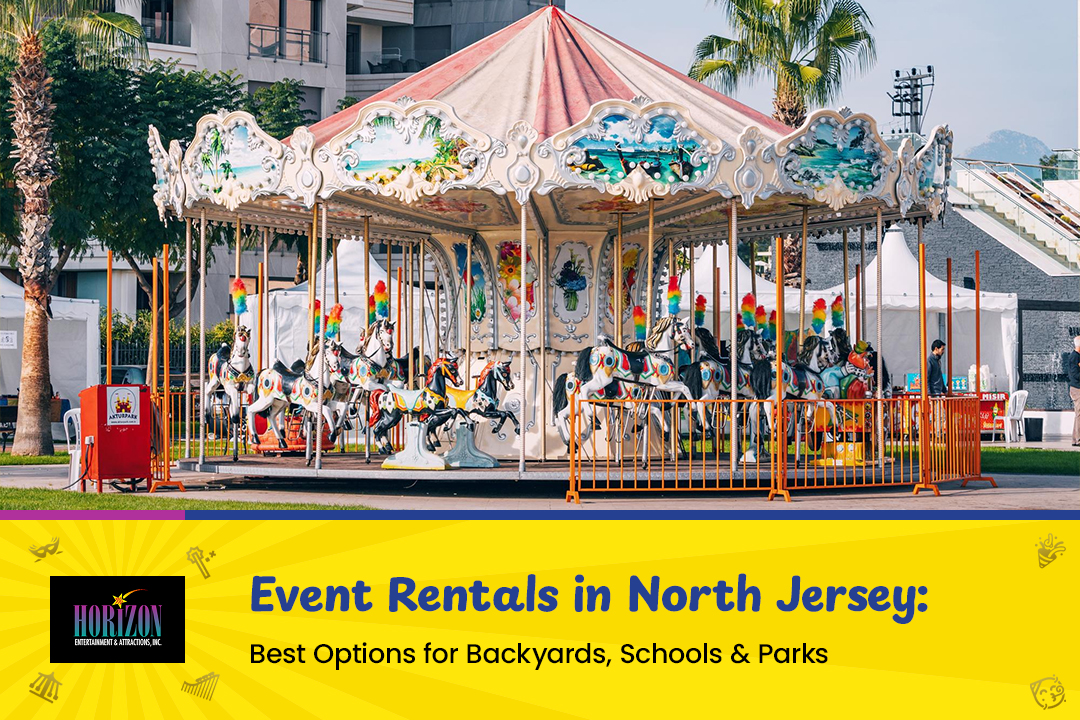
• Mid-size mechanical ride,s including merry-go-rounds and train rides: $500–$1,500 per ride, depending on capacity and staffing requirements
• Large-scale carnival attractions, including Ferris wheels and swing rides: $2,000–$5,000 or more, including operator, generator, and full setup
• Full carnival packages combining multiple attractions: Often carry significant per-item discounts compared to booking individual items separately
These ranges reflect general market conditions and will vary based on your vendor, event duration, and any additional services required. New Jersey pricing can differ from national averages due to specific insurance minimums, permit requirements, and regional labor costs.
Package Deals and Bundling Benefits
One of the most underutilized strategies in party rental pricing is the value of thoughtful bundling. Vendors prefer to fill a single truck with multiple items from one client — it’s operationally more efficient, which means they’re often willing to offer meaningful discounts on bundled package bookings
✅ Package deals typically deliver 15–25% savings compared to booking individual items separately
✅ Combining inflatables with carnival game stations creates a richer event experience at a lower per-unit cost
✅ Multi-day rental agreements often unlock additional discounts that single-day bookings don’t qualify for
✅ Adding DJ equipment, photo booths, or concession machines to a carnival package can consolidate vendor count and reduce total delivery fees
Event Duration: How Long You Run the Show
Time is money in the event rental world — and that applies directly to carnival equipment hire. Most vendors quote a base rate built around a standard rental window, typically four to six hours of active event time. Every hour beyond that window incurs an incremental cost on your invoice.
Extended events require additional operator hours and, in many cases, extended setup preparation. If your event runs from noon to 8 PM, your rental crew isn’t just working those eight hours — they’re likely arriving by 9 AM for setup and departing after 10 PM following teardown. That full operational day adds significant billable labor hours that may not be covered by your base quote.
Here’s how event duration typically shapes the final invoice:
• Base rental window (4–6 hours): Included in the standard quoted rate
• Each additional hour beyond base: Typically 15–25% of the base hourly rate per item
• Full-day events running 8 or more hours: Often priced at a discounted flat day rate, which can be more economical than accumulating hourly extensions
• Multi-day event rentals: Generally require a separate contract with specific terms governing overnight storage, equipment security, and daily operator assignments
✅ Book the shortest window that realistically accommodates your full event to keep costs lean.
✅ Build in buffer time for setup and teardown so guests aren’t standing around waiting for rides to open
✅ Ask vendors explicitly whether teardown time is billed at the same rate as active event hours
✅ Consider a staggered schedule — running attractions in two shorter blocks can be more cost-effective than one continuous extended session
Permits, Insurance, and Safety Compliance
This is the section most event planners overlook — until something goes wrong. Permits, liability insurance, and safety compliance are not optional extras in the carnival rental world. They are legal requirements that protect your guests, your vendor, and you as the event organizer from significant financial and legal exposure.
New Jersey maintains specific regulations governing amusement rides and inflatable attractions at both public and private events. The New Jersey Division of Consumer Affairs oversees amusement ride safety standards. It requires that ride operators and rental vendors meet licensing and active inspection requirements before operating at any event in the state.
Here’s what to expect in terms of compliance-related costs:
• Vendor liability insurance certificates: Most reputable vendors carry $1 to $2 million in general liability coverage; some venues require the event organizer to be listed as an additional insured party, which may carry a small administrative fee
• Annual ride inspection and certification: Required for all mechanical amusement rides; vendors factor ongoing inspection costs into their base operating rates
• Local event and amusement ride permits: Depending on your municipality, you may need a special event permit, a temporary use permit, or a specific amusement device operating permit from your local government
• Certificate of insurance for venue requirements: If your venue or school district requires a customized COI, your vendor may charge a processing or documentation fee
✅ Always verify that your vendor carries current, active liability insurance before booking
✅ Request a copy of the most recent inspection certificate for any mechanical ride included in your rental
✅ Contact your local municipality at least four to six weeks before your event to determine applicable permit requirements
✅ Confirm your venue’s own insurance requirements for outside vendors before finalizing your rental list
✅ Ask vendors whether their quotes include all compliance-related costs or whether permits are billed as pass-through expenses
Cutting corners on safety compliance to save money is never worth the risk. A single incident involving an uninsured or uninspected ride can result in liability that far exceeds any savings you captured on the front end.
Seasonal Pricing and Booking Windows
Like most event services, carnival rental companies operate on demand-driven pricing models. Spring and summer — roughly April through September — represent peak season in New Jersey. School carnivals, corporate summer picnics, birthday parties, and community fairs all cluster in these months, creating intense competition for the best equipment and driving prices upward.
During peak months, the most popular rides and complete carnival packages book out weeks or even months in advance. Vendors operating at full capacity have significantly less incentive to negotiate pricing. Off-peak events — fall festivals, indoor holiday parties, winter school events — often benefit from greater availability and more flexible pricing conversations.
Here’s what seasonal timing typically does to your carnival rental cost:
• Peak season (April through September): Full standard pricing applies; weekend dates especially fill quickly and command premium rates
• Shoulder season (March and October): Moderate pricing with better availability; weather flexibility becomes an important factor to discuss with your vendor
• Off-peak window (November through February): Potential for 10–20% savings on select equipment; well-suited for indoor event formats
• Major holiday weekends: Prices often increase 10–15% due to surge demand, and availability for top equipment is extremely limited
✅ Book at least six to eight weeks in advance for any peak-season event date to secure your preferred equipment
✅ Midweek events frequently cost less than equivalent weekend bookings at the same venue
✅ Ask vendors directly about early-booking incentives — many offer 5–10% off for reservations made 60 or more days in advance
✅ Confirm whether the vendor’s cancellation and rescheduling policy accommodates weather-related delays without penalty
Venue Type: Indoor vs. Outdoor Considerations
Where you hold your event affects your rental costs in ways that aren’t immediately obvious. Outdoor venues offer more space and easier access to power but introduce weather-related risks and anchoring considerations. Indoor venues eliminate weather concerns entirely but often impose restrictions on equipment size, ceiling clearance requirements, and anchoring methods.
For outdoor events on grass, inflatables must be staked or anchored as a standard safety requirement. This adds setup time but typically carries no additional charge with most vendors. Events on concrete or asphalt require weighted sandbags rather than ground stakes, which some vendors bill separately due to the extra equipment.
Indoor events held in gymnasiums, community halls, or warehouses typically involve additional coordination:
• Ceiling height confirmation to ensure equipment fits — most large inflatables need 16 to 20 feet of unobstructed clearance
• Non-marking floor protection material is placed under all equipment bases
• Detailed power source mapping to confirm available circuits and breaker panel capacity
• Venue-specific approval for non-anchored or ballast-weighted equipment setups
✅ Always provide your vendor with accurate venue dimensions and ceiling heights before requesting a formal quote
✅ Confirm exact flooring type so vendors can plan appropriate anchoring or floor protection solutions
✅ Ask whether an indoor event requires a separate on-site consultation or pre-event walkthrough, free
✅ Check venue-specific rules around equipment setup, noise levels, and certificate of insurance requirements for outside vendors
How to Get the Best Value on Carnival Rentals
Getting a fair price on carnival equipment rental isn’t just about finding the lowest number — it’s about understanding what’s included, what’s excluded, and whether the vendor can actually deliver a safe, professional, and memorable experience. The cheapest quote rarely represents the best value, especially once you start comparing what’s actually covered line by line.
Here are the most effective strategies for getting the strongest return on your carnival rental investment:
✅ Request fully itemized quotes — Ask for a line-by-line breakdown of every cost, including delivery, staffing, generator fees, permit assistance, and setup time
✅ Compare at least three vendors — Pricing can vary by hundreds of dollars even within the same service area
✅ Ask about equipment failure contingencies — Reliable vendors have documented backup plans and replacement equipment protocols
✅ Research reviews from local NJ clients — Real event reviews from clients in your region give you a much clearer picture than any marketing copy
✅ Clarify damage waiver terms — Some vendors require a security deposit; fully understand your financial exposure before signing anything
✅ Negotiate on package scope, not just base price — Adding an extra game station or extending event hours is often more cost-effective than simply pushing for a discount on the quoted total
✅ Verify payment and cancellation terms — Understand your deposit structure, final balance due date, and what protections exist if the vendor cancels
Working with an experienced provider who knows the New Jersey market gives you a built-in advantage. A vendor who has already run events at your specific venue type — or your specific municipality — understands the permit landscape, the available power infrastructure, and the logistical challenges that first-time event planners encounter without warning.
What to Ask Before You Sign a Rental Contract
A well-drafted rental agreement protects both parties and eliminates gray areas that can lead to conflict after the event. Before committing to any carnival vendor, make sure you’ve received clear, written answers to all of the following:
• Is staffing included in the quoted price, and how many certified operators will be assigned to my event?
• What is the vendor’s policy on weather cancellations, postponements, or rescheduling requests?
• Are permits and insurance certificates included in the pricing, or are they billed as separate pass-through costs?
• What exactly is the setup and teardown timeline, and are those crew hours included in the quoted rental window?
• Is there a damage or security deposit, and under what specific conditions is it withheld or forfeited?
• What are the payment terms, and what deposit is required to hold the event date?
• Does the quote include a generator if my venue lacks the required power infrastructure?
• What is the backup plan if a piece of equipment becomes inoperable on the day of the event?
According to SCORE’s small business vendor contract guidance, clear written terms covering cancellation rights, liability boundaries, and specific deliverables represent the single most important protection any event organizer has when working with outside vendors. Never rely on verbal agreements — every cost, condition, and contingency should be confirmed in writing before your event date is locked in.
Conclusion
Carnival rentals pricing isn’t a mystery once you understand the moving parts behind every quote you receive. Power consumption, staffing requirements, travel distance, equipment selection, event duration, permits, insurance requirements, and seasonal demand all play a role in shaping what you’ll ultimately pay. The more clearly you understand each of these variables, the better equipped you are to plan a budget that reflects reality — and choose a vendor relationship that delivers on every promise made.
Smart planning means asking the right questions early, comparing itemized quotes rather than just bottom-line totals, and selecting a provider with transparent pricing, verified insurance, and a proven track record of running safe, professional events. Whether you’re organizing a school carnival, a neighborhood block party, or a large-scale corporate summer event in New Jersey, you deserve a vendor who brings the same level of care and accountability to every booking.
Ready to get a quote that’s honest, detailed, and tailored to your event? Visit Horizon Giggles to explore carnival ride rentals, inflatable packages, and game station options serving communities across New Jersey and the surrounding tri-state area.